UK's First Casgevy Patient Completes Sickle Cell Treatment
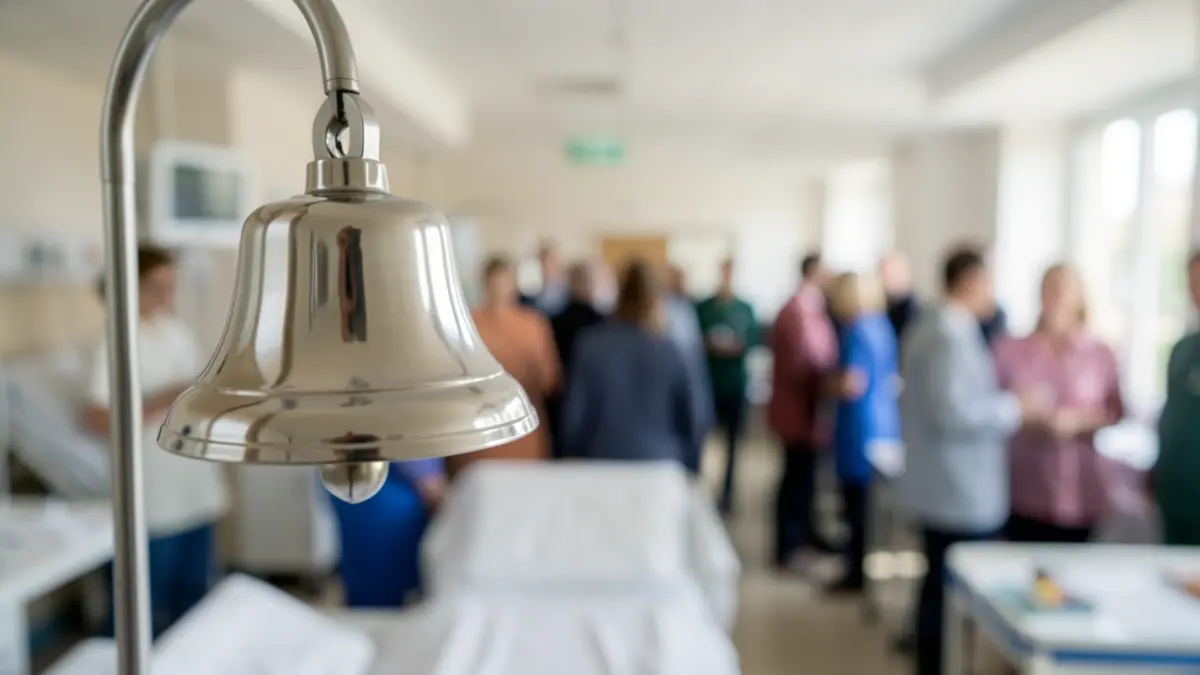
Aisha, 15, rings the bell at Royal Manchester Children's Hospital after groundbreaking gene-editing therapy for sickle cell disease.
By Megan Worthington
••4 min read
AI
Generic image of a medical bell on a table.
A 15-year-old girl, who was the first in the UK to undergo Casgevy treatment for her life-debilitating sickle cell disease, has completed her therapy at Royal Manchester Children’s Hospital (RMCH).
Aisha, from Cheadle, who has lived with sickle cell disease since birth, suffered regular, severe crises requiring hospital visits as often as every two weeks for medication and blood transfusions. She described the pain as "hammering and chiselling on your bones" and noted its significant impact on her social life, school attendance, and overall ability to lead a normal life.
Sickle Cell Disease, predominantly affecting Black African and Black Caribbean communities, can lead to severe pain, strokes, organ damage, and heart failure. Approximately 15,000 people in the UK live with the condition. Stem cell or bone marrow transplants offer a potential cure but are typically reserved for severe cases where other treatments have failed.
In February 2025, Casgevy, a gene-editing therapy using the patient’s own blood stem cells, received approval for NHS use. Aisha’s severe condition led healthcare teams at RMCH to advocate for her to receive the therapy, which was subsequently discussed and approved by regional and national sickle cell panels.
“
"When the hospital came to me to ask if we would be interested in the treatment, I had to read medical journals just to understand what I was saying yes to. But I also understood the risks of not doing anything for my daughter. The teams were great – they listened to all my concerns and they delivered."
Hamdat, who also has sickle cell disease, expressed her understanding of Aisha's pain and her desire for her daughter not to suffer. Aisha, conscious of her upcoming important school years in Year 10, decided to undergo the treatment, understanding it required a temporary sacrifice.
The transplantation process involved a two-month hospital stay, during which only her mother was allowed to visit due to her low immunity. Aisha missed her brother and friends but found support from the Hospital School in adapting to her learning needs.
While Casgevy is considered safer than a bone marrow transplant due to using the patient's own cells, the process is intensive. It involves collecting approximately 22 million cells, which are sent to the Netherlands for editing over about six months. Aisha's edited cells were then transplanted back to her, alongside chemotherapy.
Aisha experienced hair loss, muscle weakness, and difficulty eating, but remained determined. On 29 June 2026, she was discharged and has since been recovering at home. She has returned to school as a prefect in her final year of secondary school.
“
"Because I’ve missed a lot of school over the years, I’ve always tried to overcompensate and be as involved as I can. Since I was in year seven, I looked up to the prefects who showed us around the school and just knew that was a role that I would aspire to be in, and now it’s finally happening!"
Aisha has now rung the bell to signify the end of her treatment. Although she continues to receive care for ongoing muscle pains caused by sickle cell damage, she is now symptom-free and no longer experiences crises.
“
"It’s been a long journey to get here and I’m so proud of my daughter. I hope Aisha can be on her way to start living a more normal life."
“
"For people like Aisha who live with sickle cell, life can be tough. They have a poorer quality of life, are in and out of hospital with painful crises, have various appointments with specialists and can even have a reduced life expectancy. Casgevy is a transformative treatment, and it feels wonderful to know that Aisha’s life has changed. She has a good immune system, she’s back in school and leading a very normal life. I am particularly hopeful that this will become more available for younger children and that there is more in the pipeline to cure people of sickle cell."