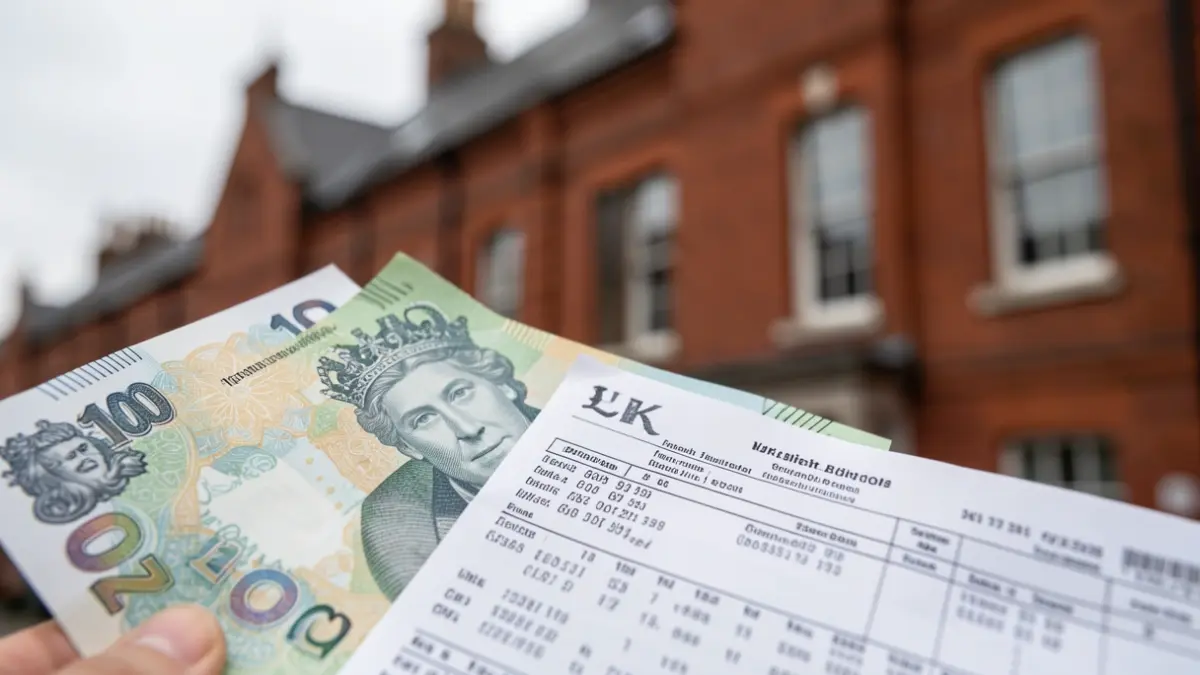
The Chancellor of the Exchequer, John Healey, presented his first budget today, Wednesday 28 October 2026, under Prime Minister Andy Burnham. The budget, dubbed the ‘Cost of Living Budget’, introduces several measures aimed at easing financial pressures on households and businesses. These include the scrapping of standard charges from household gas bills, a £100 household energy payment for 20 million households in Council Tax bands A-D this winter, and an increase in the threshold for small business rate relief to £18,000. Additionally, a 3% surcharge on banks will be implemented, alongside a rise in the minimum wage for younger workers. The budget also outlines a roadmap for fiscal devolution, with local leaders set to receive all income generated from business rates by 2030, and allocates £10bn in economic and military support for Ukraine.
Experts from the University of Salford have provided commentary on the budget's implications. Professor Andy Miah, Chair of Science Communication and Future Media, commented on the £7m fund for a feasibility study into a northern England Olympic Games bid. He highlighted the potential for distributed Games proposals, citing the Milano Cortina 2026 Olympic Winter Games and the 2026 Men’s FIFA World Cup as precedents. Professor Miah stated, “The north of England is a phenomenal proposition for an Olympic Games destination with a remarkable heritage of athletic success, the UK capital of sports broadcasting in MediaCity... and a pioneering collaboration across the regions.” He believes the region's heritage, including the 2002 Commonwealth Games and Manchester's ranking as a top 10 sporting city, makes it a compelling vision for the International Olympic Committee.
Addressing concerns about transport infrastructure, Professor Miah noted that bid processes can often “kickstart dramatic transformations to infrastructural limitations.” He added that with potential Games in the 2040s, there is ample time to address these issues. He emphasised the importance of the narrative of the north's heritage in supporting Olympians and delivering world-class events, suggesting that the IOC is prepared to be more flexible with requirements, as seen with the geographically split Milan Cortina Games.
Dr. Dave Beck, a Lecturer in Social Policy at the University of Salford, described the budget as being “for the working people,” noting that fiscal decisions were framed against the backdrop of the conflict in the middle east. He stated that the budget provides “breathing space for those struggling with the cost of living” and, while not radical, offers “appeasement” to the effects of neoliberal privatisation. Dr. Beck also mentioned the additional 3% surcharge on banks and the opening of the Jackdaw Oil Field, intended to boost the UK economy and offset rising fuel costs, though he expressed environmental concerns about further oil exploration.
Professor Vahid Vahindinasab, Professor and Chair in Sustainability, welcomed the budget's short-term focus on the cost of living and energy bills, while reaffirming the government's commitment to net zero by 2050. He highlighted measures such as the £100 payment for households in bands A-D, the abolition of gas standing charges, and support for manufacturers and retail businesses. Professor Vahindinasab also pointed to funding for electric vehicle chargers and the potential for local energy initiatives, stating, “Clearing those barriers is how breathing space today becomes local resilience tomorrow, and that is our hope for the future.”