Karinna Grant, a PhD researcher in the University’s Department of Materials, was part of a four-person international team that created Follow the Moth, an interactive digital experience designed to help people discover fashion heritage in new ways. The project was developed in just 48 hours at the MoMu Hackathon 2026 in Antwerp and went on to win two of the event’s five prizes: the European Fashion Heritage Association (EFHA) Innovation Prize and the OTB Prize.
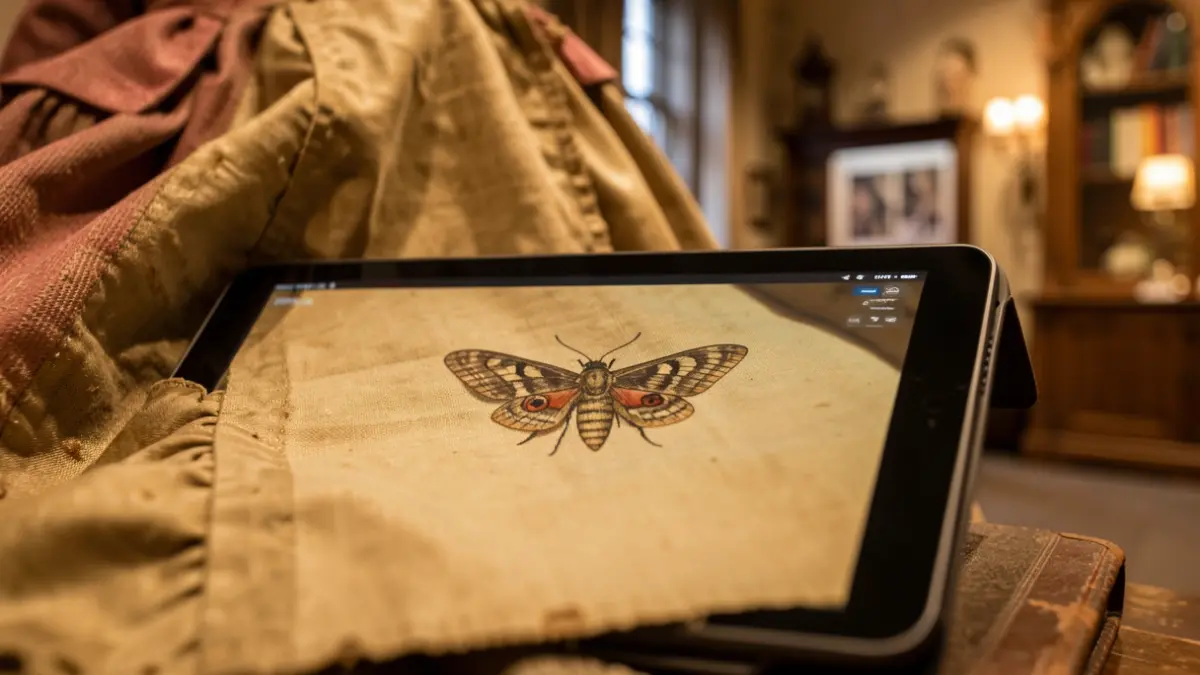
Follow the Moth uses animation, conversational storytelling, interactive 3D and augmented reality to encourage people to explore the 539 garments from the Study Collection at MoMu – Fashion Museum Antwerp, guided along the way by a fictional clothes moth. Rather than expecting visitors to know what they want to search for, the experience encourages exploration and discovery, helping to spark curiosity about the materials, construction and histories behind individual garments. One part of the experience sees the moth eat through an eighteenth-century gown before inviting visitors to digitally reconstruct it from flat pattern pieces, helping reveal how the garment was originally made.
“"We wanted to create a journey into the archive that started with intrigue rather than just a search term. In a world where everything moves fast, our prototype invites people to slow down, linger, and go beneath the surface to connect emotionally with fashion heritage."
The project was developed by TEKH, a team which formed on the first day of the hackathon and brought together expertise from different creative and technical disciplines. Grant worked on the strategy and entrepreneurial direction of the project, drawing on her doctoral research at The University of Manchester into ownership innovation and participation in fashion heritage. The team also included product designer and developer Elena Uvarova, 3D designer Hongnhi Pham and graphic designer Thibaud van Loocke.
The MoMu Hackathon brings together people working across fashion, heritage, design, research and technology to explore new ways of experiencing and interpreting fashion collections. The team believes the approach could ultimately be adapted for use by other museums, fashion archives and cultural institutions.