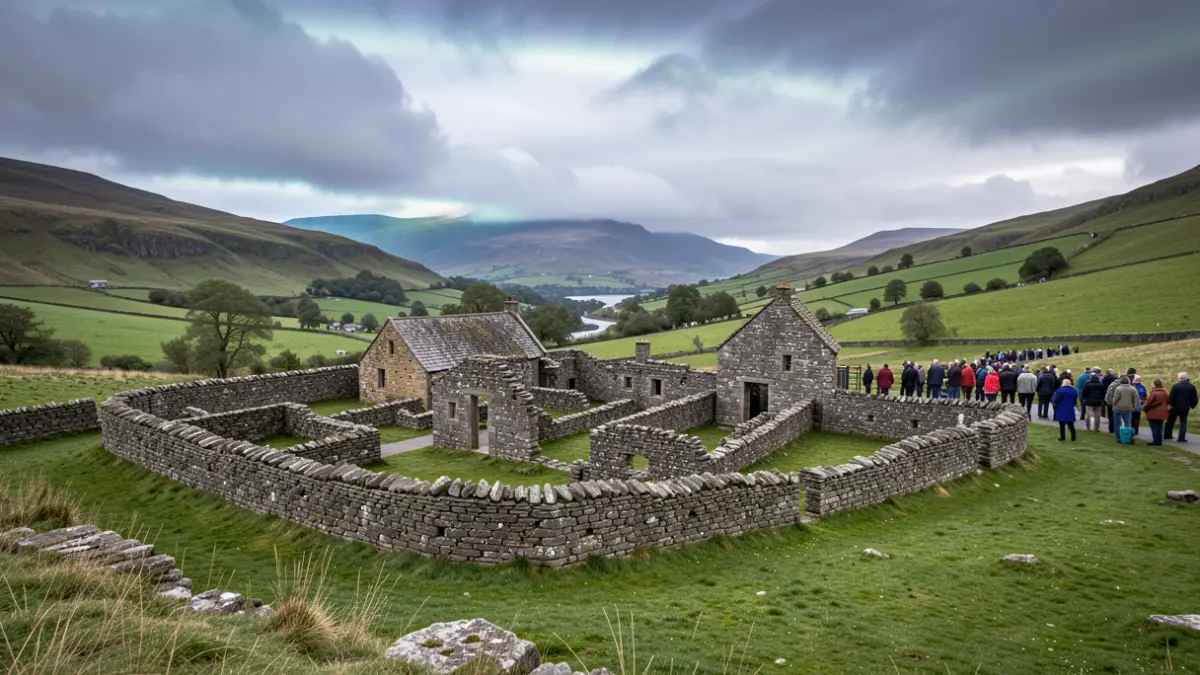
The site, located within the Duddon Estuary and adjacent to the Duddon Mosses National Nature Reserve, features surviving buildings that offer insights into the development of rural settlements and lifestyles over several centuries. Some of the earliest structures may date back to the 16th century or earlier, making it an important archaeological site due to the rarity of such well-preserved, small-scale historic buildings.
Particularly interesting are potentially unusual architectural features, including one building resembling a ‘bastle’ – a fortified farmhouse type not typically found in the region – and another that may have been a ‘laith house’, a combined dwelling and agricultural building. These features highlight Far Houses' importance to the historic environment and offer opportunities to study the evolution of farming and settlement in the Duddon Valley.
The farmstead, abandoned in the mid-20th century, had become increasingly dangerous with sections at risk of collapse. A public footpath runs through the site, necessitating consolidation work to ensure safety while preserving historic fabric. Natural England commissioned the programme, involving a conservation architect, structural engineer, archaeologist, and the Lake District National Park’s Historic Environment team.
The project included surveying and recording the buildings before removing vegetation and loose material. Dangerous sections of masonry were carefully dismantled, but large areas of original stonework, doorways, and window openings have been retained and protected with hard and soft capping. A temporary footpath diversion was arranged for the safety of the work.
The conservation work is now complete, and plans are being developed for interpretation to explain the history and significance of the site.
Visitors are encouraged to explore Far Houses, with late spring recommended for drier conditions and the planned interpretation displays. Visitors are asked to be sensitive to the historic nature of the site and leave no trace. The best approach is via the historic walled lane from Well Wood. The conservation efforts by Natural England, the National Park, and expert consultants ensure this potentially rare example of the Lake District’s built heritage can be studied and enjoyed by future generations.